Industry
Achieve operational resilience and long-term business sustainability

The majority of today’s hydrogen is produced with polluting natural gas. By switching from polluting gray or brown hydrogen to emissions-free green hydrogen, global industries can accelerate toward carbon-reduction goals.
- Methanol production
- Petroleum refining
- Steel and iron processing
- Ammonia production
Produced with 100% renewable energy, green hydrogen can help your business decarbonize operations while ensuring reliable long-term hydrogen supply.
Benefits of green hydrogen:
- Stabilize your hydrogen supply
- Decrease dependence on imported natural gas
- Ensure continuity of service
- Make progress toward carbon reduction targets
- Increase control over operational costs
Transportation
Decarbonize your fleet with sustainable, emissions-free fuel

The transportation sector is a significant contributor to global CO2 emissions. In the form of fuel by fuel cells or combustion engines, hydrogen can be used as a sustainable alternative to gasoline or diesel. Green hydrogen – produced by 100% renewable energy – is an emissions-free option for both large and small transportation applications.
- Light duty passenger vehicles
- Heavy duty vehicles such as trucks and buses
- Maritime transportation
- Aircrafts
- Trains
Benefits of green hydrogen:
- Replace polluting fuels like diesel and gasoline with emissions-free hydrogen
- Benefit from longer range, faster refueling, and higher payload than EVs
- Produce hydrogen-derived synfuels such as green ammonia, and methanol
- Reduce dependence on imported oil
Power
Maximize energy reliability with increased flexibility

Because it can be stored for long periods and converted to electricity on demand, hydrogen is used as a form of reliable energy storage. The added flexibility and energy resilience that it provides can benefit a wide range of commercial to grid-sized customers.
- Electric utilities
- Critical infrastructure (hospitals, data centers, telecom towers, etc.)
Stored green hydrogen – produced by 100% renewable energy – helps utilities mitigate renewable energy intermittency and other grid reliability issues. Green hydrogen provides critical backup power and creates a path to a more sustainable power grid.
Benefits of green hydrogen:
- Maximize renewable energy integration
- Stabilize fluctuations in power generation and power consumption
- Provide back-up power for grid disruptions
- Increase flexibility
The Hydrogen Rainbow
Green hydrogen is produced using clean, renewable energy, without releasing CO2 emission.
Gray hydrogen is produced using natural gas in a process called steam methane reforming (SMR). It roughly releases 10 tonnes of CO2 for every 1 tonne of gray hydrogen.
Brown hydrogen is produced by using coal or lignite. Roughly 19 tonnes of CO2 are emitted when 1 tonne of brown hydrogen is produced.
DID YOU KNOW?
Green hydrogen directly reduces your carbon footprint
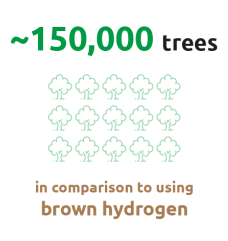
Every MW of green hydrogen used in place of brown/grey hydrogen avoids significant CO₂ – equivalent to the carbon absorbed by tens of thousands of trees every year.
Every 1 MW of green hydrogen used reduces as much CO2 as:
.avif.svg)
July 27, 2026
Ohmium Appoints Hydrogen Veteran as Chief Commercial Officer
Mark Griffin joins Ohmium as Chief Commercial Officer and will serve as the executive lead of the Ohmium Sales and Marketing organization driving revenue growth.

June 17, 2026
Ohmium and Hynfra Sign Master Cooperation Agreement to Advance Large-Scale Green Hydrogen Projects in the Middle East and Africa
Ohmium International Inc. and Hynfra P.S.A., today announced the signing of a master cooperation agreement to advance green hydrogen projects in Mauritania, Jordan, and Oman.

May 28, 2026
Ohmium and InSolare Collaborate to Deliver a Multi-application Green Hydrogen Project for NLC India Limited
Ohmium and InSolare Energy have announced their collaboration on a 4 MW capacity landmark green hydrogen project for NLC India Limited in Neyveli, Tamil Nadu. NLC India Limited is a pioneer in renewable energy development and continues to expand its green energy portfolio to support India's carbon neutrality and energy transition goals.
Take the next step toward green hydrogen
schedule a call


